
In the last 10 years, football has experienced siblings who have developed to represent different national teams. This could be due to various reasons such as background and country of residence. Others might decide to switch to their parents countries.
In this post, you will be reading about four siblings who represent different countries in football. You’ll also see the reasons behind such moves and how it turned out for them.
Siblings Who Represent Different Countries in Football
Here are four siblings who represent different countries in football:
1. The Boateng Brothers
Kevin-Prince Boateng and Jérôme Boateng grew up in the Germany. Atba young age, they were both exposed to football and even underwent the prestigious Hertha Berlin’s youth system.
However, despite sharing the same roots, they decided to represent a different national teams wgeh they grew up.
For Kevin-Prince Boateng, he was midfielder and striker who was known for his physicality in attack. On the other hand, Jérôme Boateng was more of a defender who was known for his discipline.
Well, the positions that these players grew up to play really influenced a huge part in their decision to represent different national teams.
At the time Kelvin-Prince Boateng was developing into a striker, the German striking position was already extremely competitive. As a result, Ghana offered Kevin-Prince a first team shirt which allowed him to have regular playing time.
Jérôme Boateng in his part was fully committed to the German youth teams and progressed into the senior team. As such, his decision aligned with Joachim Löw who trusted him in defense.
This decision yielded results for Jerôme Boateng as in 2014 he was became a World Cup winner at the 2014 World Cup held in Brazil. Before retirement, he earned over 70 caps for the German national team representing them in various competitions.
2. Xhaka Brothers
Granit Xhaka and Taulant Xhaka are both graduate from the well-known Kosovar Albanian diaspora community. The two players were both born in Switzerland to Albanian parents. Despite their identical background in football, the Xhaka brothers have always represented different national teams.
For Granit Xhaka, Switzerland was his choice due to the fact that he saw the country as his home that provided him with the opportunity to become a footballer. For Taulant Xhaka, Albania was a country which represented his origin and was always his first choice.
In the long run, Granit Xhaka went on to became a central figure in their Switzerland midfield. Over time, his presence have always brought security and experience to the midfield of the national team.
Taulant Xhaka equally became a pivotal player for the Albanian national team and played a role in qualifying Albania for the Euro 2016 competition.
3. Alcântara Brothers
Thiago Alcântara and Rafinha Alcântara are brothers who were born in Italy. They are both son of legendary Brazilian footballer, Mazinho. When the were young, the brothers moved to Spain with their father where they came in contact with La Masia.
It was at the La Masia youth system that helped the brothers to develop their football knowledge.
For the Alcantara brothers, it was Spain’s possession-based tactical identity that was the deal beaker for Thiago Alcantara as it fits his strengths as a controller in midfield.
For Rafinha, Brazil’s direct and expressive style of play suited him. For the brothers, their decision paid off well. Thiago Alcantara went on to win the Euro 2012 with Spain while Rafinha went on to win the Copa America 2019 with Brazil.
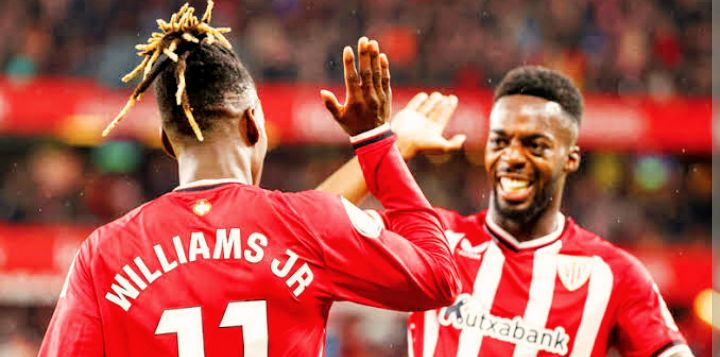
4. Williams Brothers
Iñaki Williams and Nico Williams were both born in Bilbao to Ghanaian parents. The two players developed into becoming attackers for their club side. The younger one, Nico Williams is more of an explosive winger who has now become one of Spain’s most important players.
READ THIS: A Look At The Biggest Football Club Rivalries In The Last Five Years
For Iñaki Williams, he turned out to become a central forward who is known for his hardwork and pressing. Iñaki Williams has become one of the beneficiaries of the FIFA updated eligibility rules which has allowed players to switch national teams under specific conditions.
Also, thanks to Ghana’s proactive approach to dual nationality players allowed Iñaki Williams to be able to gain caps with his national team of choice.
Another reason for the switch by Iñaki Williams is due to Spain attacking depth. Meanwhile, Nico Williams on the other hand, has benefited from Spain’s generational rebuild and has become a regular starter since the Euro 2024 tournament.
Conclusion
Siblings playing for different national teams are not a new thing these days. Thanks to FIFA rules, it is much easier than before. Yes, players who are not able to make the senior team of a nation can always switch to the nationality of their parents nation. At the end of the day, it is a win-win for the player and the national teams.