
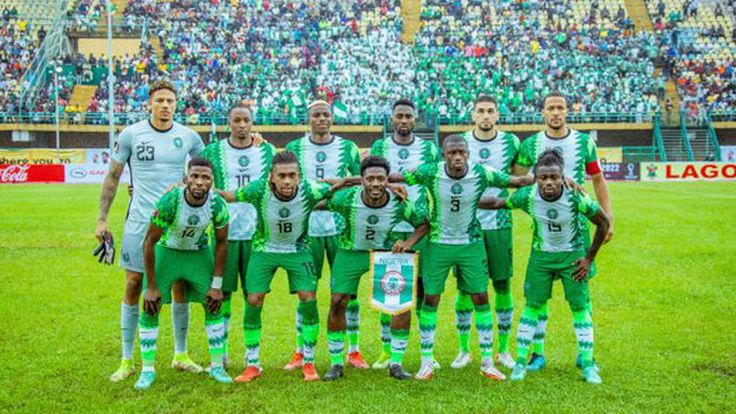
In what turned out to be a rumor, the Nigerian Football Federation has filed a petition to DR Congo over fielding ineligible players in their 2026 FIFA World Cup Qualifiers match. In the past few days, tensions have risen between the two countries over this petition.
If Nigeria gets a favorable ruling, it could mean that Nigeria would qualify for the 2026 FIFA World Cup. On the other hand, it could mean disqualification for DR Congo.
In this post, you’ll be reading about the possible scenarios that could happen when FIFA makes the final verdict. First, let’s consider the background story of how things began.
How Did We Get Here?
Well, the whole situation started at the 2026 FIFA World Cup Qualifiers at the final match between the Nigeria Super Eagles with DR Congo. After the end of regular time, the game proceeded to a penalty shootout.
At the end of the shootout, the Nigeria Super Eagles were eliminated and DR Congo proceeded to the next round of the qualifiers.
Of course, after the Nigeria Super Eagles were eliminated from the FIFA World Cup Qualifiers, fans were angry. Many expressed their disappointment in the Nigerian Super Eagles on TV and on social media posts.
The Nigerian Football Federation was heavily criticized for its inability to provide a structure that allowed the Nigerian Super Eagles to qualify through the usual group stage means.
Well, the story did not end there. In just a few days after the match, reports emerged that Nigeria had submitted a formal complaint to FIFA. The complaint was around the fact that DR Congo allegedly fielded players whose nationality status did not fully comply with FIFA eligibility rules.
According to the NFF’s arguments, these were serious violations made by the NFF that should lead to the disqualification of the DR Congo team from the match.
So far, the DR Congo Football Federation has accused the Nigerian Football Federation of trying to overturn a fair result. They accused Nigeria of trying to use off-the-pitch tactics. Now, the issue has been placed on FIFA’s table awaiting the final decision.
At this point, let’s analyze the likely scenarios that are likely to occur when FIFA makes a final declaration on the case. But first, let’s look at what the FIFA law says about this case exactly.
What do FIFA Rules Say?
Well, FIFA rules mention that a player is eligible to represent a national team if he holds the nationality of that country and if he meets at least one specific condition of that country. These conditions may include being born in that country or having lived in the country at some point in their life, or something else that is recorded in the official constitution of that country.
Usually in football, there have been cases where a player was born and raised in a European country by African parents. Now, they may hold a European passport while being eligible to play for the country of their African parents. In such cases, FIFA allows such players to choose which national team they want to represent but the process must be done following certain procedures.
A contrast now happens in a situation when a player has represented one country in a match at the senior level, and then switches to another country. If this kind of switching is not done under strict FIFA rules, then the country involved will be penalized. To do this under FIFA standards, the process would involve several documents.
Now, the most important question regarding the Nigeria and DR Congo saga is:
Was the switch from the DR Congo players approved by FIFA?
Well, the answer to that question remains unknown to many of us at this time. Let’s consider the likely scenarios to occur when FIFA sits on this issue.
Scenario 1: FIFA Dismisses Nigeria’s Petition
The first scenario likely to occur with the petition submitted by the Super Eagles is that FIFA dismisses the petition. In this outcome, FIFA would conclude that DR Congo players were duly registered to play for the DR Congo team. If that happens, Nigeria would be left at point zero.
The first reason why this scenario 1 looks most likely to occur is that Nigeria’s complaint came after the match had already been decided. So naturally, FIFA would be likely to rule in favor of DR Congo having in mind that Nigeria may be acting out of bitterness over the defeat.
In addition, FIFA usually prefers proactive objections raised before competition begins and not the ones filed after elimination.
The second reason why this dismissal is likely to happen is that a similar occasion happened in the past, and FIFA ruled against the team that filed the complaint. Recall, in 2018 when Algeria filed 10 petitions after several controversial matches.
According to FIFA, the competition integrity was more important than post-event corrections. As a result, all of these petitions were dismissed.
Scenario 2: FIFA Upholds Nigeria’s Complaint
The second scenario is the ruling that upholds Nigeria’s complaint. In this scenario, FIFA would rule in Nigeria’s favour and agree that DR Congo fielded ineligible players in violation of its regulations.
For this to happen, Nigeria would have to present strong evidence that goes beyond the fact that they are bitter about DR Congo’s qualification. Yes, they would have to convince FIFA that there was really an intentional breach of FIFA rules that directly affected the competition.
Let’s assume that this works, Nigeria would be awarded a forfeit victory which would reverse the original match result. In some cases, depending on the result, FIFA may decide that a replay should be played at a neutral venue.
However, decisions of this nature are really scarce. The reasons it is like this are that in a way, they damage FIFA’s public image. For these reasons, FIFA tends to avoid them unless the violation is really undeniable.
READ THIS: Factors That May Prevent Nigeria’s Super Eagles From Going Far In AFCON 2025
Scenario 3: Sanctions Without Changing the Result
Another scenario that we could see play out is that FIFA could acknowledge the fact that they would acknowledge that a registration problem occurred, but that would not interfere with the match result.
In this scenario, FIFA could impose fines or warnings on DR Congo’s football authorities without really interfering with the field results.
If this happens, this outcome would still mean that the Nigerian Super Eagles would be eliminated from the World Cup. So, this is not a scenario that Nigeria wishes to have. On the other hand, this is the worst-case scenario that the DR Congo team would be looking to get from FIFA’s petition.
Scenario 4: Escalation to the Court of Arbitration for Sport
The last scenario likely to occur is that if Nigeria is dissatisfied with FIFA’s decision, the case would be escalated to the Court of Arbitration for Sport. This would be done if the Nigeria Football Federation thinks that the evidence is undeniable and that DR Congo should be penalized.
However, the fact remains that the Court of Arbitration for Sports can provide a judgment on the matter, but it rarely does so in cases like this. This is because it could be assumed that since approval was given to these players in the past, there’s no need to overturn the earlier judgment by FIFA.
So, Nigeria would hope it doesn’t get to the extent, as it could lead to prolonged durations in court proceedings, which could lead to a ruling in favor of DR Congo at the end.
Conclusion
The FIFA World Cup is football’s most prized competition. It is no wonder that Nigeria and DR Congo are determined to fight off-pitch to ensure that their nation get a qualifying ticket. Well, sit back and enjoy this power tussle between Nigeria and DR Congo as it unfolds.